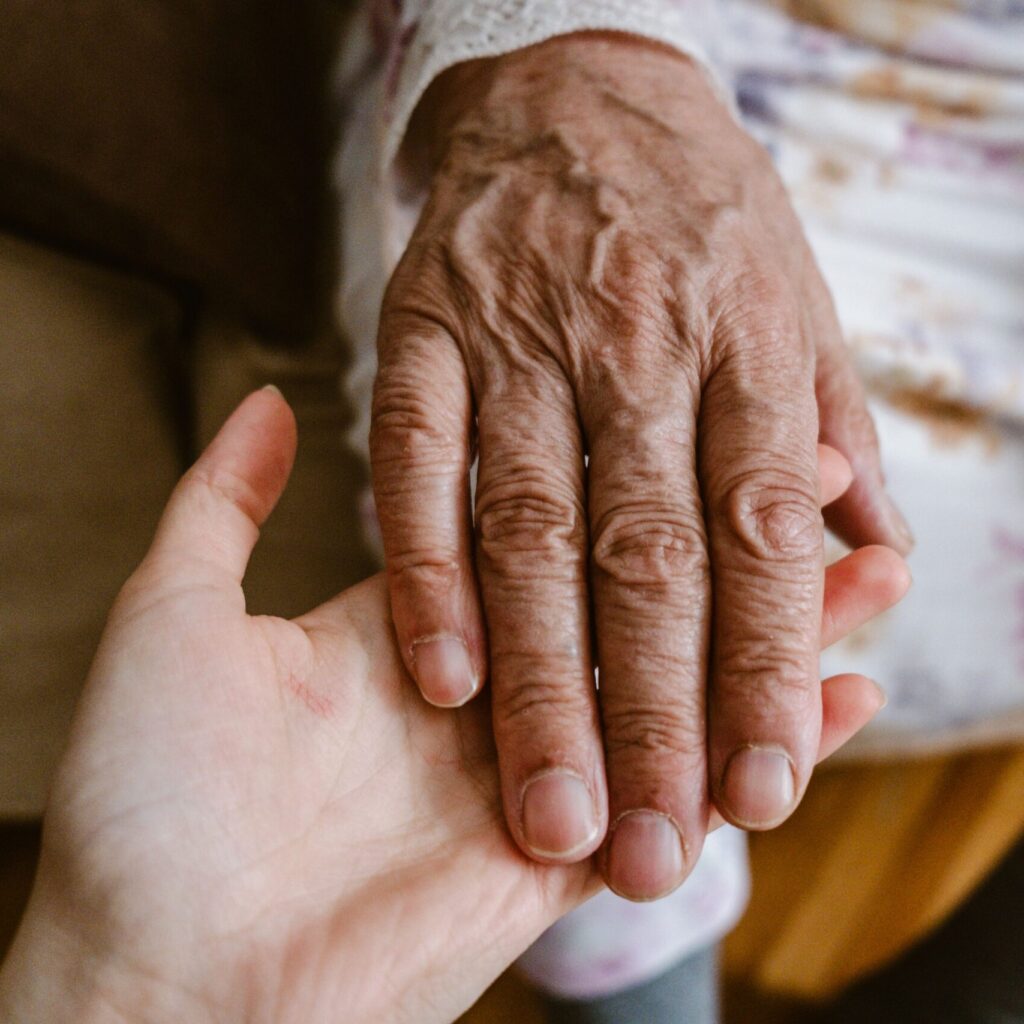
When someone is living with dementia, words can become harder to find. Thoughts may feel confusing. Time may lose its shape. Familiar faces and places can become harder to recognise. The world can feel uncertain, overwhelming, and lonely.
But even when language changes, the body still remembers and the nervous system still responds to safety. The body still feels tension, discomfort, warmth, softness, fear and reassurance. Touch can become one of the most direct ways of communicating all of this.
Touch as communication
For many people living with dementia, touch can offer something words no longer can: steady hand, or a warm palm on the shoulder. Gentle contact that says: I’m here with you.
Touch can communicate safety, connection and comfort in ways that bypass the thinking mind and speak directly to the nervous system. This can be especially meaningful when someone is feeling distressed, disoriented, agitated or withdrawn.
Beyond practical touch
In care settings, touch is often part of practical care:
Helping someone wash.
Dress.
Move.
Eat.
These acts can absolutely be caring. But there is another kind of touch too. Touch that isn’t about doing something to someone. Touch that is about purely being with someone. This kind of touch can feel very beneficial. It can help someone soften, settle, rest – and feel less alone in their experience.
The body still needs comfort
Dementia often changes how a person relates to their body. People can become restless or agitated, they can hold a lot of tension, they may struggle to sleep. Some people become less mobile and more physically uncomfortable. And for those who are bed bound, discomfort can deepen.
Lack of movement can slow down digestion, affect circulation and impact general comfort. Being in one place for long periods can increase feelings of isolation.
Gentle therapeutic touch can support comfort here. By listening through touch, and responding to the person’s needs: helping their body feel met.
What I have witnessed
In my own work with people living with dementia, including those who are bedbound, I’ve seen how much can shift through simple presence and responsive touch:
The body softens.
Breath deepens.
Eyes close for rest.
Hands unclench
A sense of settling.
Sometimes someone falls asleep and sometimes they talk, or have a good cry.
Sometimes nothing obvious happens at all – but that for a moment, they can feel deeply seen and met. And that matters.
Touch as dignity
At the heart of it, this work is not about massage: it is about dignity – and recognising that even when memory changes, and language changes, the need to feel safe, soothed, connected and human does not disappear. In many ways, it becomes even more important.
This work begins by listening. Through touch, through presence, and through meeting the person exactly where they are.
Looking for support for someone living with dementia?
If you’re supporting a loved one living with dementia, or working within a care setting and would like to explore this kind of support, you can read more about my Compassionate Touch in Care Settings offering by clicking below.